

My Man Godfrey
1936 Director: Gregory La Cava
Starring: William Powell, Carole Lombard, Gail Patrick
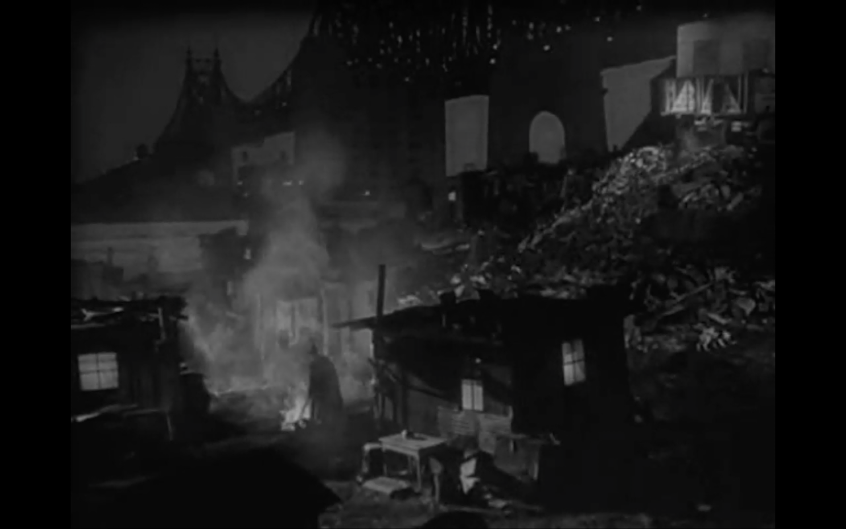
As the introductory credits roll for “My Man Godfrey,” the names of the players appear, almost like neon lights atop the New York skyline at night. A cheery instrumental accompanies the glamorous visuals, until the camera pans toward a garbage dump next to the East River and the Queensboro Bridge. The song then turns tragic and ends. At the dumpsite, a man in a raincoat and hat—a “forgotten man”—warms himself by a fire. Soon, trucks dump garbage nearby and two other men scramble up the refuse pile, presumably looking for food.
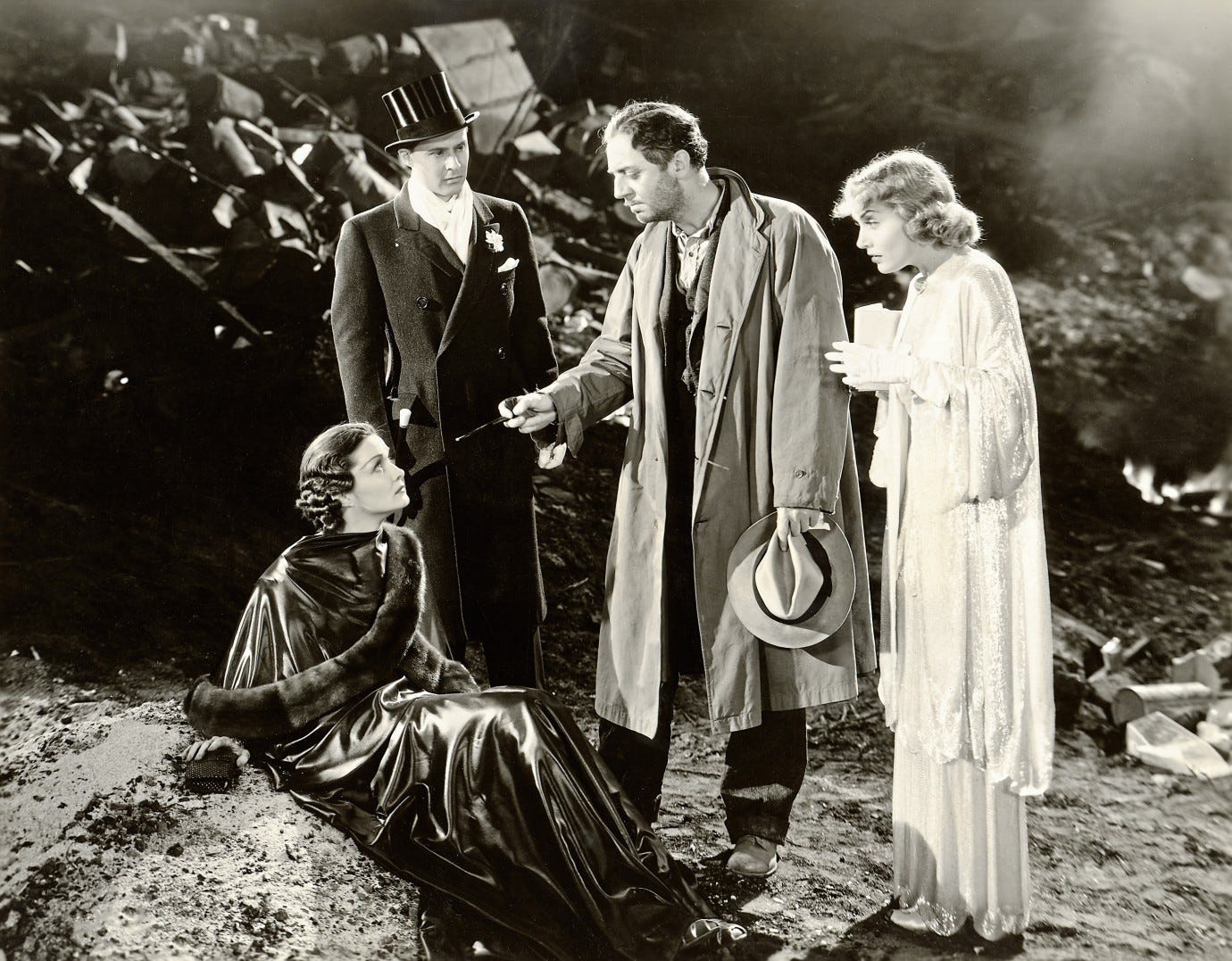
Suddenly, a shiny black car arrives and a man in a tuxedo and top hat and two women wearing elegant gowns emerge from the vehicle. Cornelia (Patrick) rushes toward the forgotten man, Godfrey (Powell), and offers him five dollars to go with her to the Waldorf Ritz Hotel and take part in a scavenger hunt. Godfrey rejects this; he is upset by her arrogance and pushes her into a pile of ashes. Her sister, Irene (Lombard), is pleased that, for once, Cornelia didn’t win. Irene is much nicer; she explains to him that they were taking part in a game, in which the participants search for “something that nobody wants.” She then realizes that she “doesn’t want to play any more games with human beings as objects; it’s kind of sordid, when you think of it.” Irene is a spoiled but naïve rich girl who has never seen adversity. She asks Godfrey why he lives at the dump when “there are so many nice places.” Her innocent question underscores the ignorance and apathy of the idle rich during the Great Depression.
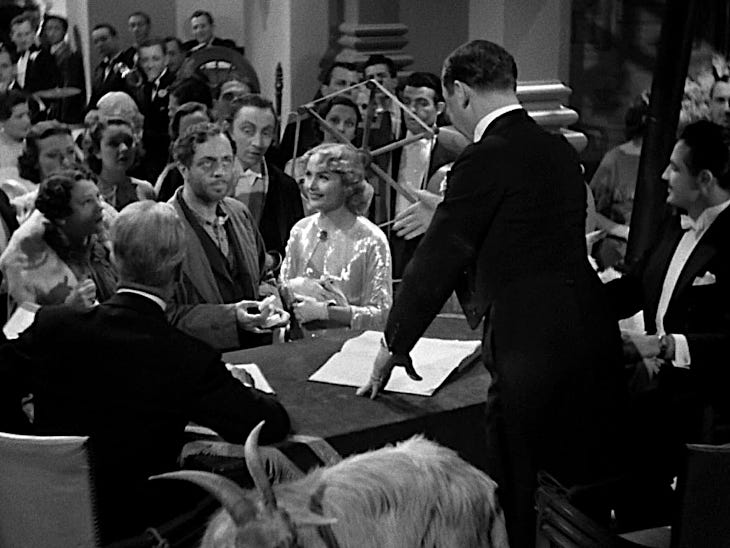
Godfrey decides to help Irene beat Cornelia at this scavenger hunt by going with her. At the hotel, Irene submits Godfrey as a forgotten man; the game’s judge determines he is legitimate and she wins the prize. Irene is instantly smitten with Godfrey and she offers him a job as the family’s butler. He becomes an outstanding asset to the household.
Godfrey, we later find out, became homeless when a woman rejected him. He considered suicide but the men at the shanty town taught him a lesson about living. We learn this at a tea party. There, Tommy Gray (Alan Mowbray) recognizes Godfrey as a school mate from Harvard, and as a member of one of the oldest families in Boston. Godfrey wishes to maintain the ruse and Tommy abides. Godfrey becomes an excellent butler, who must tolerate the frivolities and nonsense from his employers. There is no discipline in the house, mostly chaos. And this becomes worse when Irene’s father, Mr. Bullock (Eugene Pallette), announces that the family is nearly broke. Godfrey then steps into action with Tommy’s help. He does more than this, he also helps the men back at the shanty town.
In addition to being a sweet romantic comedy, the film makes an important social commentary. The wealthy frequently amuse themselves with mindless frivolity and stupidity while the poor suffer needlessly. The U.S. (and the world) emerged from one of the worst financial crises several years after this film was created. Roosevelt’s New Deal policies and World War II helped create a recovery. “My Man Godfrey” does not delve into politics. Instead, it focuses on the efforts of individuals to create change. The film warns of the dangers of arrogance, pride, and greed. The story is timeless. It encourages viewers to look within themselves and offer what they can to improve the lives of those around them, particularly the unhoused, those who are most often forgotten, but should not be.