
The First Rule of Fight Club. . .


Fight Club
1999. Director: Robert Luketic
Starring: Brad Pitt, Edward Norton, Helena Bonham Carter
When “Fight Club” first appeared in 1999, it received mixed reviews by critics. Its graphic depiction of senseless violence worried some that it merely glamorized brutality or that it might incite copycat behavior in impressionable young men.1 In spite of the savagery portrayed, it is a philosophical take on existentialism, anticapitalism, and the search for identity. It’s also a cautionary tale on toxic masculinity, loneliness, and indoctrination. Most recently, some have noted that this dystopic cult-classic foretold the extremism of MAGA politics.2 The film also contributed a series of quotable quotes into the post-modern lexicon.3
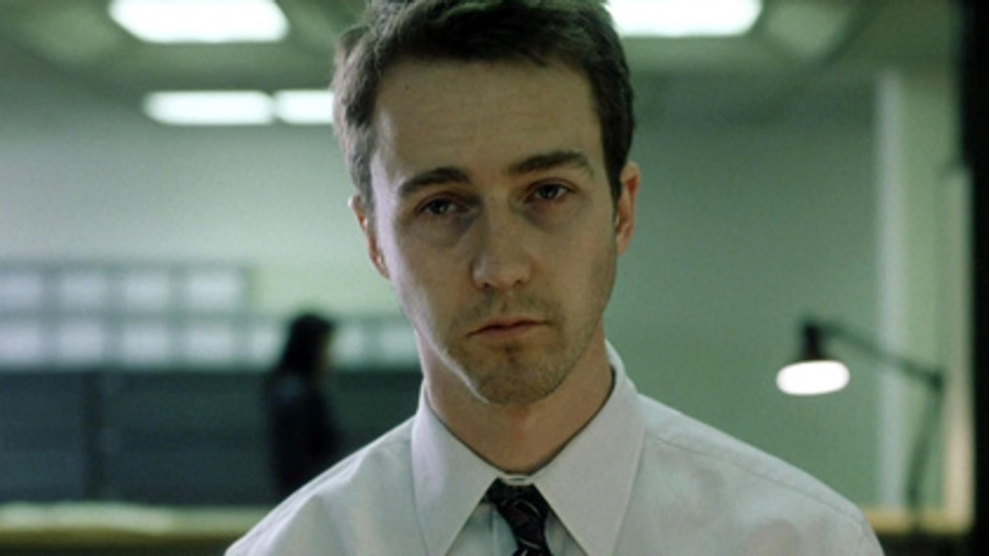
In the film, a youthful, unnamed Narrator (Norton), working a dreary job at an automobile plant complains to his doctor about his insomnia. The callous doctor dismisses his request for medication and, instead, tells him to join a therapy group for testicular cancer, because these men are truly suffering. The Narrator follows his orders, which somehow helps him get the sleep he needs. One night, however, Marla Singer (Bonham Carter) appears at the men’s cancer meeting, which irritates him tremendously. Her presence there is obviously counterfeit, for which he brands her a “tourist.” Whereas he was beginning to find relief at several of these groups, her presence at all of them now prevents it.
Later, while on a business flight, the Narrator meets Tyler Durden (Pitt). They strike up a conversation and the Narrator laughs mirthlessly at Tyler’s joke about oxygen masks. Tyler demeans him for his phony, forced laughter. Tyler sees things differently than most people and seeks to convert him to his way of thinking. Tyler is a leader and the Narrator is a follower. Leaders make the rules and followers must simply perform.
Upon his return home, the Narrator finds that it’s been destroyed in an explosion. He calls Tyler, who then meets him at a bar and the pair bond over pitchers of beer. When they leave, he hints at his need for lodging. Tyler wants to be asked if he can stay at his house. Although Tyler is amicable and subtle, he is actually establishing the tone of the relationship and the ground rules for his authority. The Narrator confuses this with friendship. Tyler follows up with a directive disguised as request: “I want you to do me a favor: I want you to hit me as hard as you can.” The petition startles the Narrator, but after Tyler insists, he complies. Tyler asks for the ridiculous, following up later with more outrageous demands and regulations. The pair punch each other mercilessly that night and create an underground “Fight Club” and young men join as a way of taking control over their lives.
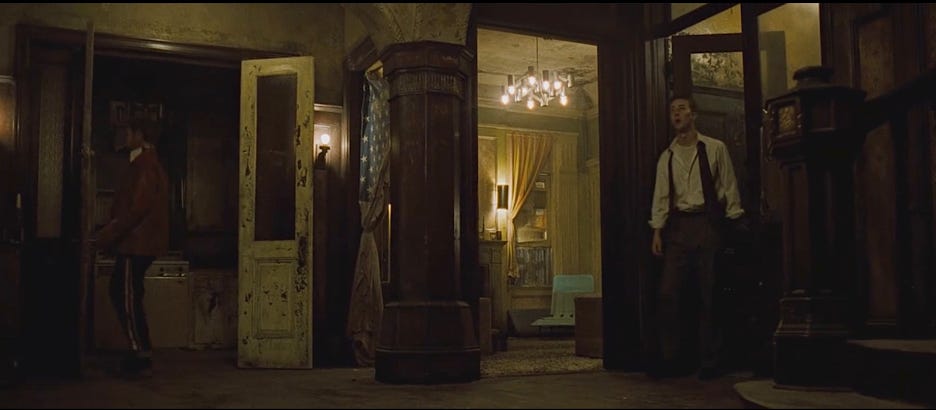
Once at Tyler’s house, the Narrator is taken aback by its dilapidated condition. He describes it as a “shit hole.” Its windows are boarded up, the stairs could collapse, the water is rusty-brown. The place is a mess and nothing works, but it goes along with Tyler’s anti-consumerism ideas. The two cohabitate and frequent the bar where the Fight Club meets. Their lives become squalor. Everything becomes dingy and dark, nasty and obscene, coarse and crude.
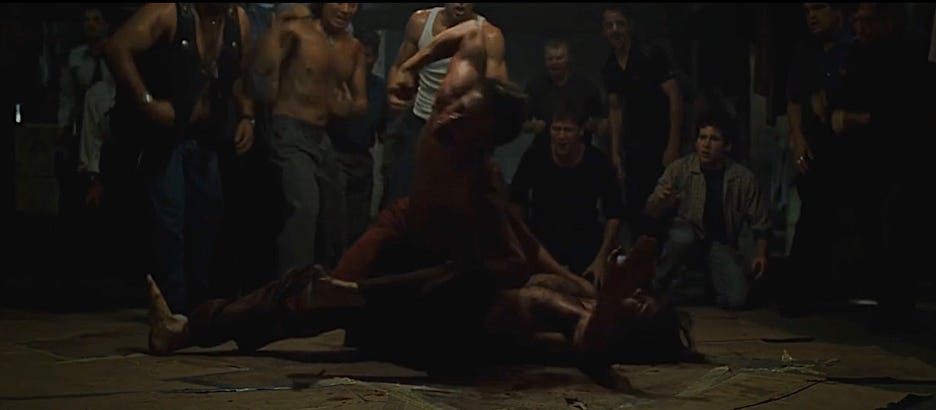
Saturday nights are devoted to Fight Club and the rest of the week hardly matters. Lots of men join the group, wanting their brains bashed in. Tyler wants the Narrator to become fearless and it starts to work. He shows up at the office disheveled and bloody; he starts being sassy with his boss. The Club becomes a release for the pressures of life for these men. As the Narrator states, the fighting “solved nothing,” but he believes he is now “enlightened.”
At the Club, Tyler sets the rules: “The first rule of Fight Club is you do not talk about Fight Club.” The second rule is exactly the same, for emphasis. There are eight rules through which Tyler establishes his dominance over the other men.4 Slowly, he becomes more authoritarian and more degrading, and his little soldiers, more obedient—including the Narrator. Tyler is an Alpha Bro; he exploits lonely, disillusioned men by offering something unique: attention to those seeking it, thrills to those bored with their lives and, perhaps most importantly, a regimen they lack. But he is also a nihilist and a sadist. Gradually, everything escalates. . . .
This film does what few others do. It keeps you watching it in spite of the horror it presents. It’s the car-crash effect on the freeway—we can’t turn away regardless of what gore it may offer us. We are transfixed by an ever-increasing sequence of ugly events. Tyler is the catalyst for this dilemma because he is so unpredictable and manipulative. Hence, the following equation: viewer = voyeur. It is Tyler’s presence that keeps the spectator watching, no matter what, as if it were just another one of his commands. And, so, now I have Tyler Durden living rent-free in my head! Oh, great!
Copyright © 2026 by Rosi Prieto, Ph.D.
All Rights Reserved
https://en.wikipedia.org/wiki/Fight_Club
https://collider.com/best-fight-club-quotes-ranked/
A clip where Tyler sets these infamous rules can be found here: