

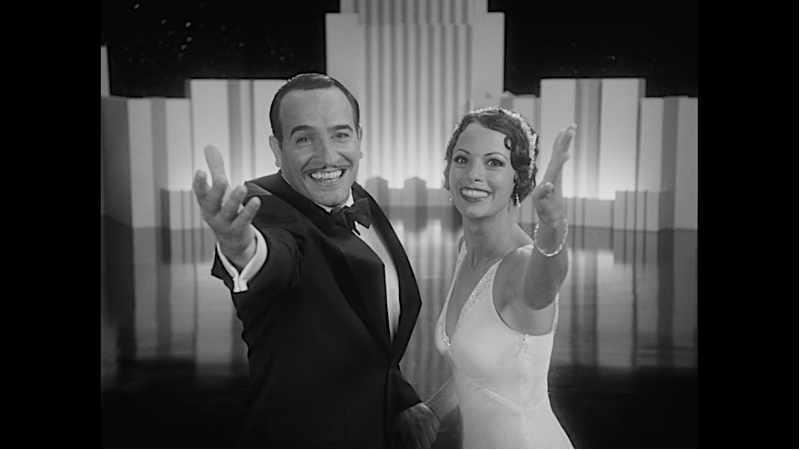
The Artist
2011 Director: Michel Hazanavicius
Starring: Jean Dujardin, Bérénice Bejo, James Cromwell, John Goodman
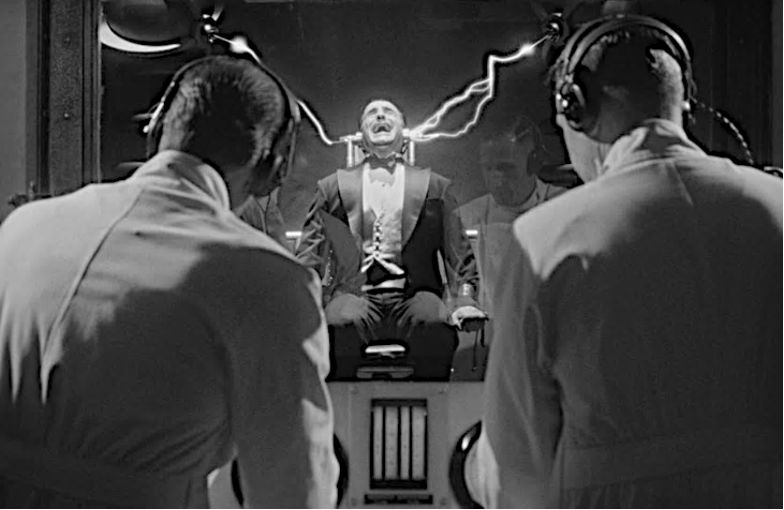
“Speak!” “Speak!” Some horrific device resembling earphones shoots electrical currents to George Valentin’s ears—he is being tortured by mad scientists. One of them turns up the voltage until George faints and military guards then drag him to an isolation cell. But this is a silent picture! How can he possibly speak? It’s 1927 and George (Dujardin) is at the height of his game. Everyone loves his movies and he is a great celebrity. The issue of speech is an important one in this film because, as we soon realize, the “talkies” are coming and George is reluctant to change. His resistance is reminiscent of Norma Desmond’s (Gloria Swanson) in “Sunset Boulevard” (1950): another silent film star unwilling to adapt.1 Why mess with success? What if the public is wrong? And when faced with this concept, arrogant Norma has a great line: “I am big. It’s the pictures that got small.” But time marches on in spite of what any of us would prefer.
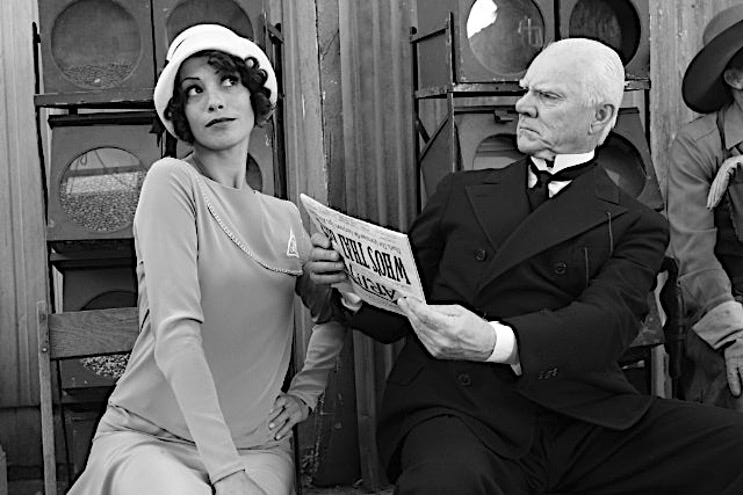
And it certainly does. And Peppy (Bejo), the young beauty George meets among the crowds at one of his film premieres, is someone who is definitely willing to change with the times. Peppy was just a fan, then an extra, then a dancer who eventually gets lines, and then she rises to stardom. Both work for Kinograph Studios and the studio boss (Goodman) tells George that talkies are the future, but he rejects this. George leaves Kinograph to write, produce, direct, and star in another silent film that becomes a flop as audiences embrace sound in the movies, and particularly those starring Peppy. George is in a downward spiral as he loses his wife and even his fortune in the Crash of 1929. He is on a great losing streak. But Peppy, who always admired him, comes to his rescue. Her efforts recall Vicky’s (Judy Garland) in “A Star is Born” (1954), although Peppy is more successful.2
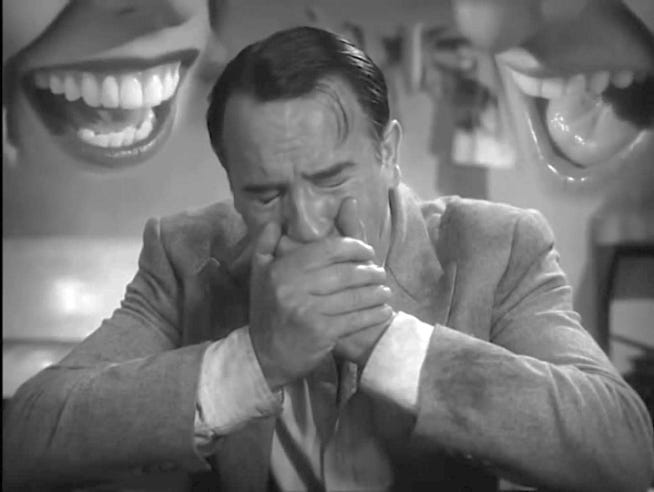
Life sometimes delivers a great blow when we least expect it. And “The Artist” makes us aware of this fact in clever ways. In a brilliant scene, after rudely mocking an early talkie, George hears noises (as does the viewer) all around him, apparently for the first time: glasses clinking, traffic in the street, and objects thudding, but he himself cannot make a sound. He has no voice. He is silenced. And the worst part is that he did it to himself by refusing to embrace the future. But other passages give us this message too; near the beginning of the film, a sign backstage tells actors to be silent, and they all comply. And after he screens his old films at home, his own reflected shadow walks away from him in a bittersweet moment.
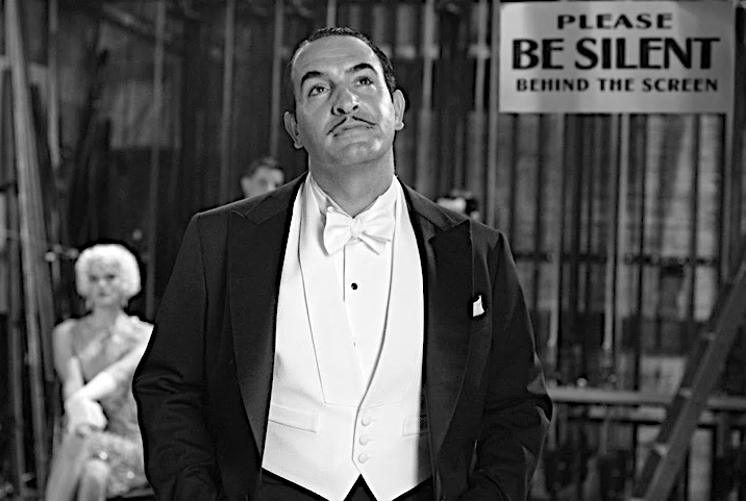
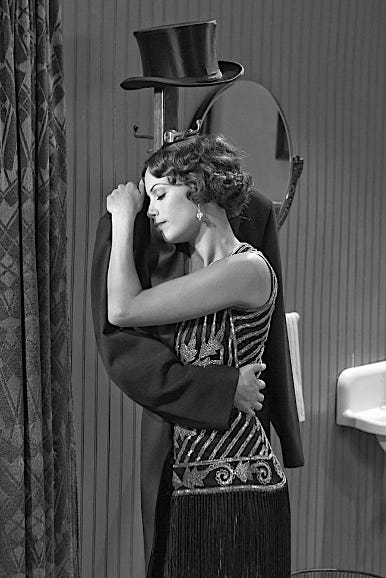
“The Artist” also reflects aspects of the silent film era with great visual imagery (in black and white, of course). The story unfolds mainly through title cards3 that provide the characters’ dialogue and expressive gestures. For instance, a star-struck Peppy charmingly steals an embrace from George’s coat, as if it were actually him. And Bejo as the flirty, cheerful ingenue is adorable. Dujardin as George often wears an infectious smile that dazzles the viewer, but his face is heartbreaking when his luck changes. The lavish Art-Deco sets reflect films of the period accurately.
Certainly, this film cautions against clinging to old ideas and foolish pride. We find that sometimes we must change our mind just to survive. Writer/director Hazanavicius challenges the notion that an artist does not compromise his vision or works in isolation (à la van Gogh), rejecting advice, particularly in filmmaking, which is a cooperative enterprise. Another important lesson in this film is that George is lucky that he has at least three true friends who believe in him: Peppy, Conrad the Chauffeur (Cromwell), and his faithful dog. We should all have friends like this.
Copyright © 2026 by Rosi Prieto, Ph.D.
All Rights Reserved
https://en.wikipedia.org/wiki/Sunset_Boulevard_(film)
See also: https://www.meetmeatthemovies.com/p/in-the-darkest-noir-sunset-boulevard
Vicky (Garland) tries to save her husband, Norman (James Mason), a washed-up movie star from self-destruction. https://en.wikipedia.org/wiki/A_Star_Is_Born_(1954_film)
https://en.wikipedia.org/wiki/Intertitle